



If you’ve been applying for jobs and hearing nothing back, it can feel confusing, even discouraging.
You update your resume. You tailor it. You hit apply on dozens of roles. And then… silence.
Let’s be honest, most job seekers don’t realize what is actually happening after they click “submit.”
Before a recruiter ever sees your resume, it often goes through something called an ATS.
And this is where a lot of resumes quietly fail.
In this guide, we are going to break down exactly how ATS systems work step by step, why they reject strong candidates, and what you can do to finally get your resume seen.
What Is an ATS and Why It Matters

ATS stands for Applicant Tracking System.
It is software used by companies to collect, scan, and filter job applications before a human recruiter reviews them.
Think of it as a digital gatekeeper.
Big companies receive hundreds or even thousands of applications per job. No recruiter has time to manually read every resume first. So the ATS does the first round of filtering.
If your resume is not formatted correctly or does not match the job description closely enough, it may never reach a human.
This is why so many people say:
- “My resume is not getting interviews”
- “Why do resumes get rejected so fast?”
- “How do I pass ATS systems?”
The issue is often not your experience. It is how your resume is being read by the system.
Step-by-Step: How ATS Systems Actually Work
Let’s walk through the exact journey your resume takes.
Step 1: You Submit Your Application
You upload your resume through a company career portal, LinkedIn, or a job board.
At this moment, your resume is not being judged by a human.
It is being stored in a database. The ATS starts preparing it for analysis.
Step 2: ATS Parses Your Resume
Parsing means the system breaks your resume into readable sections.
It tries to identify:
- Your name and contact details
- Work experience
- Education
- Skills
- Job titles
- Dates of employment
This is where formatting matters more than most people realize.
If your resume has:
- Tables
- Columns
- Graphics
- Unusual fonts
- Complex design layouts
The ATS may misread or skip important information.
This is one of the biggest reasons professionals lose opportunities without knowing it. If you are applying with a modern design-heavy resume, it may look great to you, but confusing to the system.
Step 3: Keyword Matching Begins
This is the core of ATS filtering. The system compares your resume to the job description.
It scans for keywords like:
- Job titles
- Required skills
- Tools and software
- Industry terms
- Certifications
For example, if a job requires “project management,” “budget control,” and “stakeholder communication,” the ATS looks for those exact or similar terms in your resume.
This is why ATS-friendly resume writing is not just about design. It is about language.
If your resume says “managed team deliverables” but the job says “project management,” you might be under-scored by the system. Even highly qualified candidates get filtered out here.
Step 4: Scoring and Ranking
Once the ATS reads your resume, it assigns a score or ranking.
There is no universal score system, but most ATS platforms use internal logic such as:
- Keyword match percentage
- Experience relevance
- Job title alignment
- Education match
- Skills match
Candidates are then ranked.
Only the top percentage moves forward to human review. This is where many job seekers get eliminated silently. If your resume score is low, it never reaches a recruiter.
Step 5: Recruiter Review Begins
Only after filtering does a recruiter or hiring manager see your resume.
At this stage, they are often reviewing:
- Top 10 to 30 percent of applicants
- Pre-filtered candidates
- Shortlisted profiles
This is why small improvements in ATS optimization can dramatically change your interview rate.
If your resume makes it here, your chances increase significantly. But if it does not, it is invisible no matter how strong your background is.
Step 6: Final Shortlisting
Recruiters now scan resumes quickly, often in under 10 seconds.
They are looking for:
- Clear career progression
- Relevant experience
- Strong achievements
- Role alignment
This is where storytelling and clarity matter.
Even if you pass ATS, a poorly written resume can still get rejected at this stage. That is why both ATS optimization and human readability matter equally.
Why Resumes Get Rejected Before Interviews
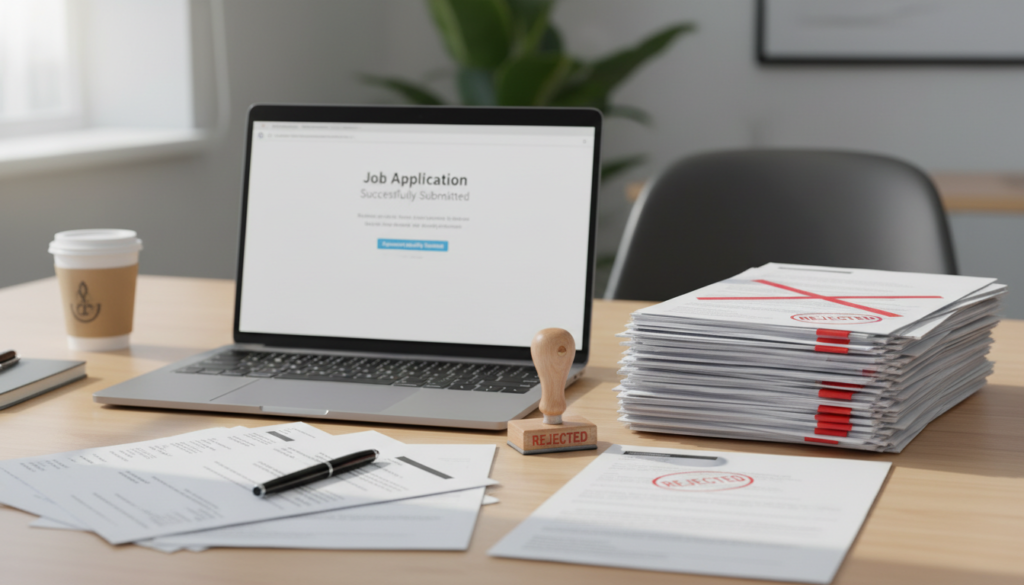
Let’s break down the most common reasons resumes fail ATS systems.
1. Poor Formatting
- Tables and columns confuse parsing
- Images and icons are ignored
- Fancy templates reduce readability
2. Missing Keywords
If your resume does not reflect job description language, it gets filtered out.
3. Generic Content
Many resumes sound the same:
“Responsible for managing tasks and supporting teams.”
This does not stand out to ATS or recruiters.
4. Career Gaps or Mismatch
ATS may deprioritize resumes that do not clearly match role requirements.
5. Over-Reliance on AI Resumes
This is a growing issue.
AI-generated resumes often look polished but lack strategic keyword alignment and real career positioning. This is where the “resume vs AI resume” gap becomes very real.
ATS-Friendly Resume vs Traditional Resume
Here is a simple comparison:
| Traditional Resume | ATS-Friendly Resume |
| Designed visually | Designed for parsing |
| Focus on style | Focus on structure |
| Generic language | Keyword-optimized |
| May include graphics | Plain formatting |
| Human-focused only | Human + ATS optimized |
An ATS-friendly resume is not boring. It is strategic. It is built to pass the system first, then impress the recruiter.
How to Pass ATS and Get More Interviews

If you want to improve your chances, focus on these practical steps:
Use Simple Formatting
- Single column layout
- Standard fonts
- No graphics or icons
Match Job Description Language
- Use exact keywords when possible
- Mirror job titles and skills naturally
Focus on Results
Instead of saying:
“Managed marketing campaigns”
Say:
“Increased campaign conversions by 35 percent through targeted digital strategies”
Optimize for Each Application
Yes, tailoring matters. Even small keyword adjustments help.
Keep a Clean File Format
PDF is usually safest unless otherwise specified.
Real Example: Why One Resume Failed and Another Worked
We worked with a mid-career operations manager who was applying for roles for 4 months with no interviews.
His resume looked strong on paper, but:
- It used a modern design template
- It lacked exact ATS keywords
- It had vague bullet points
After restructuring:
- Simplified formatting
- Added keyword alignment with job postings
- Strengthened achievement-driven language
He started getting interview calls within 2 weeks.
This is not magic. It is alignment between resume, ATS systems, and recruiter expectations.
Common Myths About ATS Systems

Let’s clear up a few misconceptions.
“More applications means better chances”
Not always. Poorly optimized resumes just get rejected faster.
“Templates solve everything”
Templates often hurt ATS readability.
“ATS is the only problem”
Not true. Content quality still matters after you pass ATS.
“AI resumes are enough”
AI helps, but it rarely replaces strategic human resume writing.
When You Should Consider Professional Help
If you are experiencing:
- No interview calls despite strong experience
- Confusion about resume formatting
- Career change struggles
- Job search burnout
It may be time to get expert input.
A professional resume writing service can help you:
- Build an ATS-friendly resume
- Improve keyword targeting
- Align resume and LinkedIn optimization
- Strengthen your career narrative
- Increase interview conversion rates
At this stage, small changes can create a major impact.
FAQs
Why is my resume not getting interviews?
Most likely due to ATS filtering, missing keywords, or unclear positioning.
Are ATS-friendly resumes really important?
Yes. Most companies use ATS systems before human review.
Is it worth hiring a resume writer?
If you are not getting interviews, professional resume help can significantly improve results.
How long should a resume be?
Usually 1 to 2 pages depending on experience level.
Can a resume help me switch careers?
Yes, but it needs strategic positioning and keyword alignment.
What is reverse recruiting?
It is a service where experts actively help you apply, optimize, and target jobs on your behalf.
Final Thoughts
A good resume does more than list your experience. It tells your story in a way that both machines and humans can understand.
ATS systems are not your enemy. But they are a filter you need to understand.
If you are applying and hearing nothing back, the issue is often not your skills. It is how your resume is being read.
We have helped professionals across industries improve their resumes, increase interview rates, and rebuild confidence in their job search.
If you want clarity on where your resume stands, start with a free resume review. It is often the fastest way to see what is holding you back.
You can also book a free consultation if you want personalized guidance on your career direction or job search strategy.
And if you are ready for a complete transformation, explore our professional resume writing service options designed to help you move from applications to interviews with confidence.