



You’ve applied for government jobs before. Maybe dozens of them. Maybe more.
And yet, nothing happens.
No interviews. No feedback. Just silence.
Let’s be honest, that silence is frustrating in a different way. Government roles feel stable, structured, and “fair,” yet the hiring process often feels anything but transparent, especially when your Government Job Resume is not clearly aligned with what federal recruiters are actually looking for.
Most job seekers don’t realize this, but federal resumes follow a completely different logic compared to private sector applications. And this is where a lot of resumes quietly fail.
Not because candidates are unqualified, but because the resume is not built for how federal recruiters actually evaluate applications.
If you are stuck in that cycle of applying and hearing nothing back, this might be why.
Why Federal Resumes Are Not Like Regular Resumes
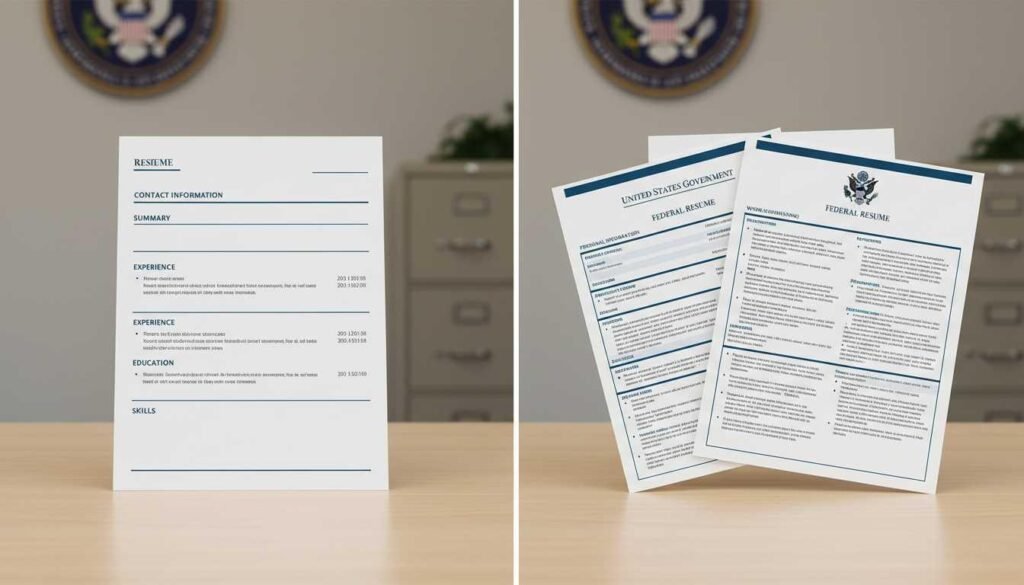
A government job resume is not just a document. It is closer to a detailed work record.
In the private sector, your resume is about storytelling and impact.
In federal hiring, it is about proof, structure, and compliance.
Federal recruiters are not scanning for creativity. They are scanning for:
- Eligibility
- Keywords that match job announcements
- Detailed work history
- Clear evidence of responsibilities
- Accurate timelines and roles
This is also why many candidates struggle with ATS-friendly resume formatting in government applications.
Because what works in private companies often does not work here.
We have helped professionals across industries improve their resumes for federal and public sector roles, and the pattern is always the same. Strong experience, weak presentation.
How Federal ATS Systems Actually Work

Let’s clear up a common misunderstanding.
ATS systems used in government hiring are not just keyword filters. They are structured evaluation systems tied to job announcements.
When you apply through platforms like USA JOBS, your resume is often compared directly against:
- Required qualifications
- Specialized experience sections
- Job series criteria
- Grade level requirements
This is why how to pass ATS is not just about keywords, it is about alignment.
If your resume does not mirror the job posting structure, it may never reach a human reviewer.
This is where many job seekers ask:
“Why is my resume not getting interviews even though I’m qualified?”
The answer is usually structure, not experience.
What Federal Recruiters Actually Look For

Most job seekers overthink this.
Federal recruiters are not looking for fancy wording or branding. They are looking for clarity and completeness.
Here is what they prioritize:
1. Detailed Work History
They want to see exactly what you did, where, and when.
2. Quantifiable Responsibilities
Not just “managed projects,” but what kind, how many, and what outcomes.
3. Job Announcement Alignment
Your resume should reflect the same language used in the job posting.
4. Consistency Across Roles
No unexplained gaps or unclear job transitions.
5. Evidence of Eligibility
Education, certifications, or experience that meets the grade level requirements.
This is where an ATS-friendly resume designed specifically for government roles becomes essential.
Common Government Resume Mistakes
This is where most applicants lose their chance without realizing it.
Resume mistakes we see often:
- Using a short private-sector style resume
- Ignoring job announcement keywords
- Missing detailed job descriptions
- Not including months and years for roles
- Weak or missing specialized experience section
- Copying generic templates that are not federal-ready
If you are applying and getting no response, one of these is usually the reason.
Most job seekers don’t realize that in federal hiring, detail is not optional. It is expected.
What a Strong Federal Resume Actually Looks Like
A strong government resume is typically:
- 3 to 5 pages long
- Highly detailed per job role
- Structured according to job announcements
- Keyword aligned with federal job postings
- Fully ATS-friendly but also human-readable
This is very different from the one-page resume advice people often hear in the private sector.
A professional resume writing service that understands federal hiring will always prioritize structure over brevity.
Resume vs AI Resume in Government Hiring
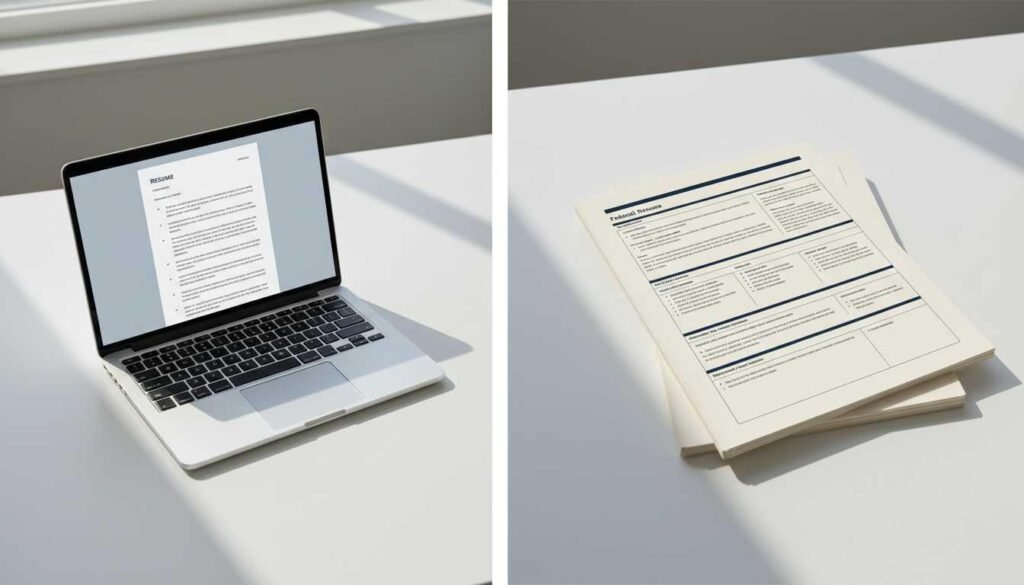
There is a growing trend of using AI tools to create resumes.
But here is the truth.
A resume vs AI resume comparison in federal hiring usually looks like this:
AI-generated resumes:
- Too generic for job announcement alignment
- Lack detailed federal terminology
- Miss required structure for eligibility sections
- Often fail ATS matching in government systems
Human-written federal resumes:
- Match job announcement language precisely
- Include structured experience breakdowns
- Highlight compliance and eligibility clearly
- Improve interview selection chances
Most federal recruiters can tell when a resume is AI-generated. It usually lacks depth and specificity.
Why LinkedIn Still Matters for Government Jobs
Many people think LinkedIn optimization is not important for federal roles.
That is not entirely true.
While LinkedIn may not be used for formal selection, it still plays a supporting role:
- Recruiters may verify your background
- Hiring managers may check consistency
- It strengthens your professional credibility
If your resume and LinkedIn profile tell different stories, it creates doubt.
A consistent LinkedIn profile strengthens your overall application, even in government hiring.
Case Study: Breaking Into a Federal Role After Rejection
Let’s take a real scenario.
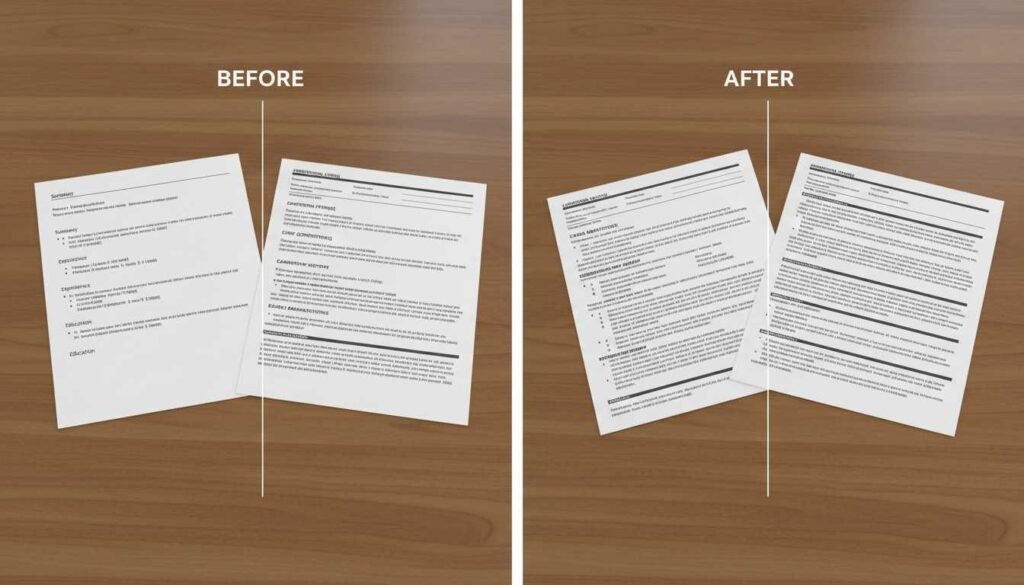
A mid-career logistics manager applied for federal roles for over 8 months without success. He had strong private-sector experience but no interviews.
His original resume:
- One-page private-sector format
- No job announcement alignment
- Missing detailed responsibilities
- No structured eligibility sections
After a professional resume review, the changes included:
- Expanded federal-style resume format
- Added detailed role descriptions
- Matched keywords from USAJOBS postings
- Reframed experience into federal language
Result:
- First referral in 3 weeks
- Interview invitation within 6 weeks
- Job offer within 10 weeks
Same experience. Different positioning.
Myths About Government Job Resumes
Let’s clear a few things up.
Myth 1: More applications means better results
Not true. Poorly aligned resumes just get ignored faster.
Myth 2: Templates are enough
Templates do not understand job announcements or federal grading systems.
Myth 3: ATS is the only problem
ATS is part of it, but human alignment matters just as much.
Myth 4: AI resumes are sufficient
AI can help with structure, but not with federal strategy or compliance alignment.
Signs Your Federal Resume Needs Help
You might need resume help if:
- You are qualified but not getting referred
- Your resume is under 3 pages for federal roles
- You are unsure how to match job announcements
- You are getting no interview callbacks
- Your resume feels outdated or generic
- You are switching from private to government sector
If this sounds familiar, the issue is likely positioning, not capability.
When Professional Resume Help Makes Sense

A strong professional resume writing service can make a real difference when:
- You are targeting competitive federal roles
- You are transitioning from private to government jobs
- You are repeatedly rejected despite meeting requirements
- You need ATS optimization for government systems
- You want a structured, compliant federal resume
We have seen what actually works in hiring, especially in structured government environments where detail and alignment matter more than branding.
This is also where services like resume review, LinkedIn optimization, and full job application help become valuable, especially for busy professionals.
Frequently Asked Questions
Why is my resume not getting interviews for government jobs?
Most likely due to missing alignment with job announcements or insufficient detail in experience sections.
Are ATS-friendly resumes really important for federal jobs?
Yes. Federal systems rely heavily on structured keyword and eligibility matching.
Is it worth hiring a resume writer for government jobs?
If you are struggling with referrals or interviews, professional help can significantly improve your chances.
How long should a federal resume be?
Typically 3 to 5 pages depending on experience level and job requirements.
Can a resume help me switch into government roles?
Yes, if it is rewritten to match federal job language and structure.
What is reverse recruiting?
It is a service where experts apply to roles on your behalf and optimize your job search strategy for better results.
Final Thoughts
A government job resume is not about sounding impressive. It is about being precise, structured, and aligned with how federal hiring actually works.
A strong resume does more than list your experience. It tells your story in a way that makes someone want to interview you.
And in federal hiring, clarity often beats creativity.
If your resume is not getting results, it may not need more experience. It may need a better strategy.
Get Expert Help With Your Federal Resume
If you are serious about landing a government role, you do not have to figure it out alone.
You can:
- Get a free resume review
- Book a free consultation with a resume expert
- Explore a tailored professional resume writing service
- Improve your LinkedIn optimization for career credibility
- Ask about reverse recruiting support
Sometimes the difference between rejection and interview is not your experience. It is how clearly that experience is presented.