



You apply for a role you are genuinely qualified for. Professional resume help concept showing ATS optimization, LinkedIn alignment, and career strategy decision-making.
You wait a few days.
Then a few weeks.
Nothing. No response, no interview, not even a rejection email.
Let’s be honest, that silence can feel worse than a rejection when you don’t tailor your resume for each job application, even if you are qualified.
Most job seekers don’t realize this, but the problem is rarely a lack of experience. It is usually a lack of alignment between the resume and the job.
This is exactly where many resumes quietly fail.
And once you understand how hiring systems actually work today, tailoring your resume becomes less of a “nice idea” and more of a necessity.
Why You Must Tailor Your Resume for Every Job

If you are thinking, “I know I can do this job, so why am I not getting interviews?”
You are not alone.
We see this often in professionals who come to us for resume review services. Strong experience, solid background, but very low response rates.
Here is the truth most people miss.
Recruiters do not read every resume deeply at first. They scan for relevance.
If your resume does not immediately look aligned, it gets skipped.
This is one of the biggest reasons behind resumes not getting interviews and why resumes get rejected even for good candidates.
It is not about your capability. It is about how clearly your value is presented.
How ATS Actually Impacts Your Job Applications

Before a recruiter sees your resume, it often goes through an ATS-friendly resume system.
Think of it as a filtering tool, not a decision maker.
It looks for:
- Keywords from the job description
- Relevant skills and tools
- Job titles and role alignment
- Clean formatting and structure
If your resume does not match those signals, it may never reach a human.
This is why understanding how to pass ATS is critical in today’s job market.
For example, if a job description repeatedly mentions:
- Stakeholder management
- Agile delivery
- Cross-functional leadership
But your resume says:
- Worked with teams
- Handled projects
- Coordinated tasks
The meaning is similar, but the system does not see it as a strong match.
This is where a professional resume writing service becomes valuable. Not to change your experience, but to translate it into hiring language.
What It Actually Means to Tailor a Resume
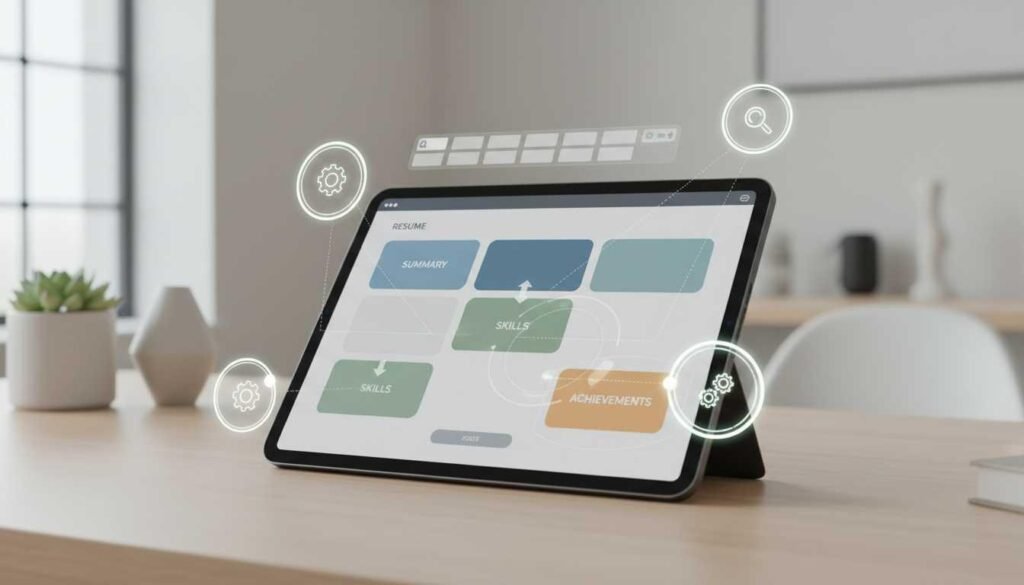
A lot of job seekers overcomplicate this.
Tailoring does not mean rewriting your entire resume every time.
It means adjusting focus.
Here is what changes:
1. Your summary becomes job specific
Instead of:
“Experienced professional with strong leadership and communication skills”
You write:
“Operations manager with 8+ years of experience leading logistics teams, improving efficiency, and managing cross-functional workflows”
Small shift. Big impact.
2. Your achievements are reordered
What matters most for the job appears first.
If the role focuses on data, data achievements come first. If it is leadership, leadership impact comes first.
3. Keywords are naturally aligned
Not stuffed. Not copied blindly. Just integrated where they make sense.
This improves both ATS performance and recruiter readability.
Common Resume Mistakes That Reduce Interview Chances

If you are applying consistently but hearing nothing, check this list carefully:
- Using the same resume for every application
- Writing responsibilities instead of results
- Ignoring job description language
- Long paragraphs instead of clear bullet points
- Weak or generic summary section
- No alignment between resume and LinkedIn optimization
This is where most candidates lose opportunities without realizing it.
We have seen professionals transform results simply by fixing these areas.
Resume vs AI Resume: Why Automation Alone Fails
AI tools are everywhere now. And they can be helpful.
But there is a clear gap between a resume vs AI resume and a professionally tailored one.
Here is a simple comparison:
| AI Generated Resume | Human Tailored Resume |
| Generic phrasing | Role-specific positioning |
| Keyword guessing | Job description alignment |
| Flat storytelling | Career narrative structure |
| No hiring context | Real recruiter expectations |
AI can format. But it does not understand hiring intent. That is where experience and strategy matter.
What Recruiters Actually Look For in Seconds
Most resumes are scanned in under 10 seconds initially.
Recruiters are not reading everything. They are looking for signals.
They want:
- Clear role relevance
- Familiar job titles
- Measurable achievements
- Keywords that match the role
- Simple, structured layout
If your resume does not communicate this quickly, it is usually skipped.
This is why resume help is not just about writing. It is about clarity and positioning.
Why Resume and LinkedIn Must Work Together
One of the most overlooked parts of job application strategy is consistency.
Your resume and LinkedIn optimization should tell the same story.
If your resume says “Project Manager” but your LinkedIn says “Operations Specialist,” it creates confusion.
Recruiters check both. They are looking for:
- Alignment in job titles
- Consistent career direction
- Matching achievements
- Clear positioning
This is often addressed in professional resume writing service packages that include LinkedIn optimization as well.
Real Example: Before and After Resume Tailoring

Let’s look at a real situation we see often.
Before
A mid-level IT engineer applies to 50+ jobs.
No interviews.
His resume says:
- Worked on systems maintenance
- Handled IT support tasks
- Assisted in network operations
Accurate, but too generic.
After Tailoring
The resume is adjusted for cloud infrastructure roles.
Now it highlights:
- Reduced system downtime by 35 percent through proactive monitoring
- Managed cloud infrastructure migration across enterprise systems
- Improved network reliability using automation tools
Result:
Multiple interview calls within 3 weeks.
Same experience. Different positioning.
This is the difference job application help can create when done properly.
Signs Your Resume Needs Professional Support
You may need a resume review if:
- You are applying but getting no interviews
- You feel unsure how to tailor your resume
- You are changing careers or industries
- Your resume has not been updated in years
- You are overwhelmed by job applications
In these situations, an expert review can quickly identify gaps you may not see yourself.
You can explore a free resume review or learn more about how it works on our service page.
Myths That Hold Job Seekers Back
Let’s clear a few common misconceptions.
More applications equals better results
Not true. Targeted applications perform better than volume.
Templates fix everything
Templates help structure, not strategy.
ATS is the only problem
Not always. Positioning and clarity matter equally.
AI tools are enough
They help, but they do not replace human hiring insight.
When Professional Resume Help Makes Sense

Not everyone needs help. But many professionals reach a point where DIY stops working.
A resume writing service is especially useful when:
- You are targeting competitive roles
- You are switching industries
- You are aiming for senior or executive positions
- You are not getting interviews despite strong experience
We have helped professionals across industries improve their resumes by aligning them with real hiring expectations, not generic templates.
This includes:
- ATS-friendly resume optimization
- LinkedIn optimization
- Cover letter alignment
- Strategic career positioning
You can also explore pricing or book a consultation if you want clarity on your next step.
Frequently Asked Questions
Why is my resume not getting interviews?
Most often due to poor job alignment or weak ATS keyword matching.
Are ATS-friendly resumes really important?
Yes. Most companies use ATS systems before human review.
Is it worth hiring a resume writer?
If you are applying consistently without results, it can significantly improve outcomes.
How long should a resume be?
Usually one to two pages depending on experience.
Can a resume help me switch careers?
Yes, but it must highlight transferable skills strategically.
What is reverse recruiting?
It is when experts help identify and apply to jobs on your behalf to improve interview chances.
Final Thoughts
A resume is not just a document. It is your positioning tool in a competitive hiring system.
Most job seekers are not rejected because they are unqualified. They are overlooked because their resume is not tailored to the job.
And that is fixable.
A strong resume does more than list your experience. It tells your story in a way that makes someone want to interview you.