



Analytical intelligence is what often sets people apart in their careers. We regularly witness people who excel at problem-solving naturally, while others find it difficult to make clear decisions. We also notice professionals who get promoted consistently and stay in the spotlight, while equally hardworking employees stay stuck in the same positions for years.
So, what gives them the edge? More often than not, it’s Analytical Intelligence.
It is not about having a high IQ or being the smartest person in the room. It’s a technique of thinking clearly and making sense out of chaos when everything feels messy.
In this article, we’ll understand what analytical intelligence really means, why it is important, and how being an analytical thinker can help you take your career to new heights.
Key Types of Intelligence: Robert Sternberg
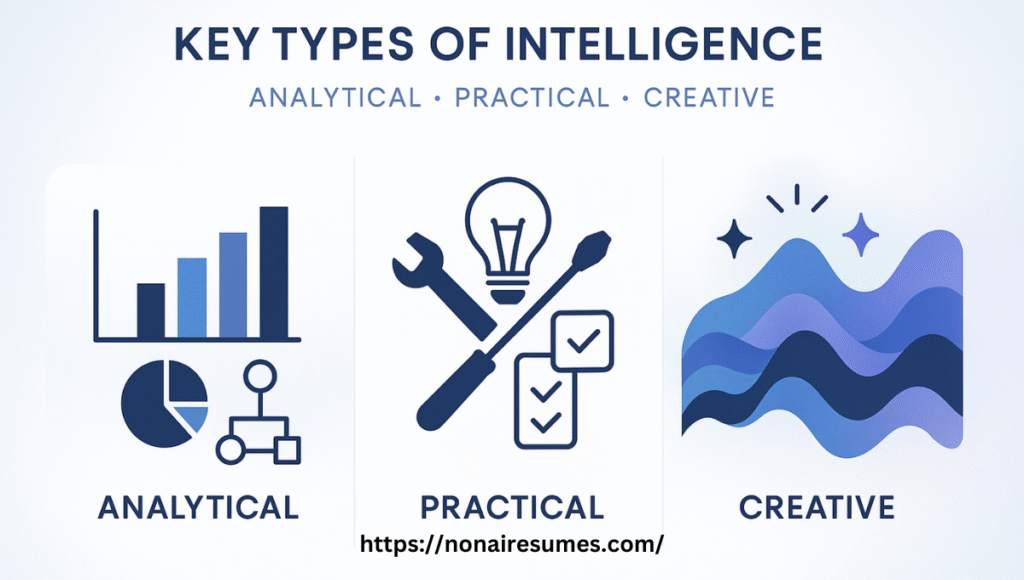
While analytical intelligence plays a vital role in your career, it’s actually part of a bigger framework. Psychologist Robert Sternberg proposed the Triarchic Theory of Intelligence, which argues that human intelligence isn’t a single score — it’s three distinct abilities working together.
Those three are analytical, creative, and practical intelligence:
| Type | What it does | Everyday name |
|---|---|---|
| Analytical | Breaks problems down, evaluates, and reasons logically | “Book smarts” |
| Creative | Generates new ideas and adapts to unfamiliar situations | “Idea smarts” |
| Practical | Applies knowledge to get things done in the real world | “Street smarts” |
Most people lean naturally toward one, but the strongest professionals develop all three. Let’s look at each one.
What is Analytical Intelligence?
Analytical intelligence is your brain’s ability to:
- Break down complex problems
- Spot meaningful patterns
- Think through situations with logic and reason
- Evaluate information objectively
- Find the most effective solution
In simple words, it helps you stay calm, think clearly, solve problems step by step, and make smart choices based on facts.
If you want a one-line analytical intelligence definition, it’s this: the capacity to analyze, compare, and evaluate information in order to reach a logical conclusion. In Sternberg’s framework, this is the component most closely measured by traditional IQ and academic tests which is why the analytical intelligence psychology definition is often shortened to “componential” or reasoning-based intelligence.
You’ll also see it written as analytic intelligence the two terms mean the same thing. And the underlying analytical abilities it depends on are things like logical reasoning, pattern recognition, critical evaluation, and structured problem-solving.
Analytical Intelligence Examples
1. Analytical Intelligence in Job Interviews:
Do you remember in your last job interview, when the interviewer asked you to “walk them through how you’d solve this problem”? They weren’t just making conversation they were testing your analytical intelligence.
2. How It Works in Real Life:
Imagine you’re managing a project, and suddenly your team misses a deadline. Instead of panicking or blaming others, someone with strong analytical intelligence would take a step back and ask:
- Why did we miss the deadline?
- Were the resources enough?
- What can we change in the timeline or process to avoid this next time?
An analytical thinker gathers the facts, identifies the root cause, and finds a practical solution. That’s analytical thinking in action.
3. Beyond the Office:
Some of the clearest analytical skills examples in real life happen outside work entirely comparing two insurance policies line by line, working out why your monthly budget keeps overshooting, or figuring out which route consistently gets you to work faster. Same skill, different setting.
What is Practical Intelligence?
Practical intelligence deals with real-world issues and getting things done when there are no clear-cut instructions to follow or resources available to rely on. This type of intelligence is often called “street smarts.”
Practical Intelligence Examples
- Quick Fix Under Pressure: Fixing a broken coffee machine at work using a quick DIY trick while everyone else waits for maintenance is a perfect practical intelligence example.
- Leading with Common Sense: Managing a team without formal training, solving conflicts on the spot, and finding shortcuts to get tasks done efficiently.
What is Creative Intelligence?
Creative intelligence is all about mental flexibility, and it allows you to think of new ideas, adapt to new environments, and tackle problems in different and creative ways. It’s a powerful example of intelligence that focuses on innovation and originality.
Creative Intelligence Examples
- Creative Product Ideas: Coming up with a new product idea no one’s thought of before, or solving a problem when the usual solutions aren’t working.
- Smart Social Media Content: You design a fun social media post that turns a slow-selling product into a trending favorite.
How to Build Analytical Intelligence in Yourself
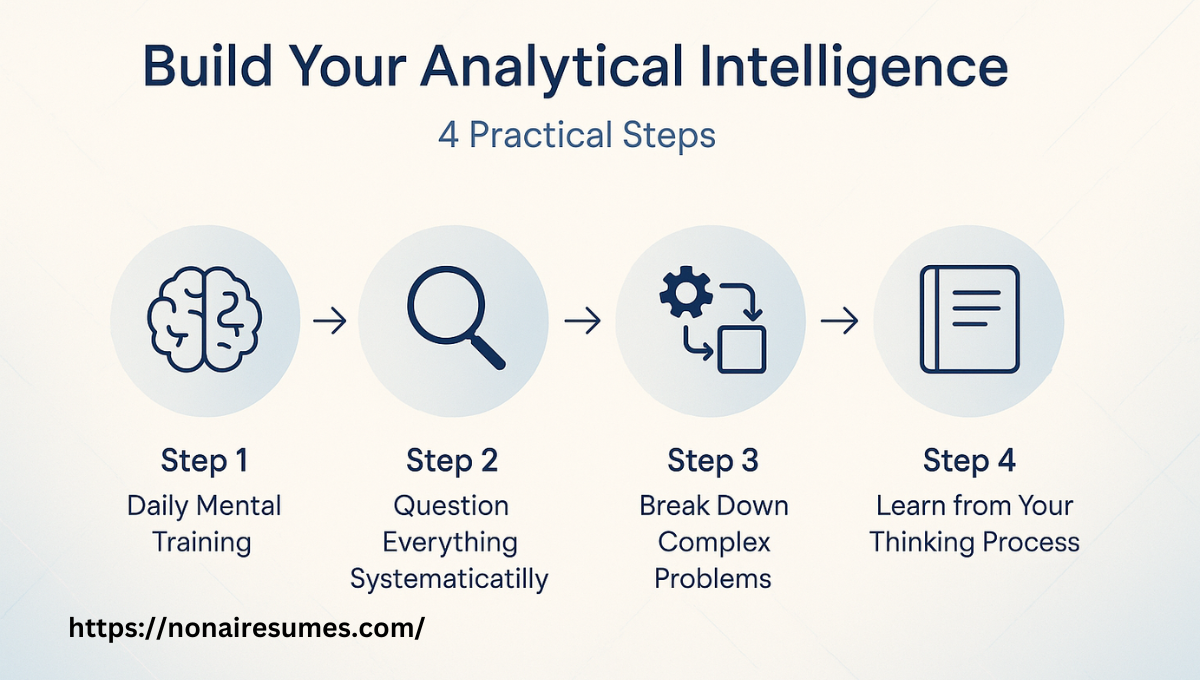
Developing analytical intelligence takes consistent practice and intentional thinking habits. Here’s a step-by-step guide to help you become a stronger analytical thinker:
Step 1: Start with Daily Mental Training
You can increase your analytical intelligence through regular mental exercise. Start dedicating 15–20 minutes daily to activities that challenge logical reasoning:
- Solve puzzles like Sudoku, crosswords, and logic games
- Play chess or strategic board games that require planning ahead
- Read challenging books on science, philosophy, or economics
As you read, practice identifying:
- The author’s main arguments
- The evidence they provide
- Any logical gaps in their reasoning
These exercises will sharpen your pattern recognition and sequential thinking abilities and transform you into a great analytical thinker.
Step 2: Question Everything Systematically
The meaning of an analytical person goes beyond just being logical it’s about approaching life with systematic curiosity. Train yourself to ask:
- Why did this happen?
- How does this work?
- What evidence supports this conclusion?
- What alternative explanations might exist?
Use a simple evaluation framework:
- Source: Who is providing the information?
- Evidence: What proof do they offer?
- Motive: What might they gain from this perspective?
- Other Views: Are there different viewpoints?
With practice, this questioning becomes second nature and greatly enhances your analytical thinking.
Step 3: Practice Breaking Down Complex Problems
True analytical thinkers avoid rushing into solutions. Instead they:
- Break problems into smaller components
- Identify what they know, what’s unknown, and underlying assumptions
- Analyze patterns and relationships before acting
Example: If you want to boost your productivity, don’t just download a new app. First, analyze:
- When you’re most and least productive
- What drains your energy or distracts you
- Which conditions help you focus
This approach can help you create more thoughtful and effective solutions that not only address immediate challenges but also deliver lasting impact over time.
Step 4: Learn from Your Thinking Process
Improvement comes from reflection. After making a decision or solving a problem:
- Review the steps you took
- Identify challenges or bottlenecks
- Note what information was most useful
- Ask: “What would I do differently next time?”
Keep a decision journal to record:
- Important choices
- Your reasoning process
- Final outcomes
How Analytical Skills Drive Professional Success
Analytical skills are the foundation of smart decision-making, strategic thinking, and long-term career growth. They enable professionals to solve problems effectively, make data-informed choices, and stand out in any competitive workplace. People with high analytical intelligence tend to move faster in their careers for exactly this reason. Here’s how:
1. Become the Problem-Solver Everyone Trusts
People naturally gravitate toward colleagues who can think through challenges systematically. When others feel overwhelmed, your ability to break problems into manageable pieces makes you invaluable.
How to develop this:
- Volunteer for challenging projects that others avoid
- Demonstrate your analytical approach in action
- Save and share your problem-solving process to build a reputation for strategic thinking
2. Make Data-Driven Decisions That Impress Leaders
Modern businesses value evidence-based decisions over gut feelings. This approach builds credibility with decision-makers and sets you apart from colleagues who rely on opinions alone. Even without a technical role, you can develop comfort with:
- Spreadsheets
- Basic statistics
- Clear data visualizations
How to stand out:
- Present ideas with reasoning and evidence
- Highlight alternatives you considered and why you made certain recommendations
- Build credibility by avoiding opinion-only arguments
This is where analytical expertise becomes visible to leadership not in what you know, but in how you justify what you recommend.
3. Anticipate Problems Before They Occur
Analytical intelligence helps you think ahead and identify potential issues early. This foresight is extremely valuable to employers because preventing problems is always better than fixing them.
Practical steps:
- Practice scenario planning: regularly ask “What could go wrong?” and “What would we do if…?”
- Develop contingency plans for different situations
- Help your organization avoid pitfalls to become a strategic asset
4. Communicate Complex Ideas Clearly
Your ability to break down complicated concepts into understandable components makes you essential for client relationships, team collaboration, and leadership roles.
Tips for Clear Communication:
- Clearly explain complex topics to people with varying levels of expertise
- Structure messages logically
- Start with the main point
- Provide supporting evidence
- Address concerns
- End with clear next steps
5. Position Yourself for Leadership Roles
Analytical intelligence is crucial for managers and executives. Leaders must evaluate options, understand dynamics, and decide with incomplete information. Analytical acumen at this level is less about crunching numbers and more about knowing which questions matter.
How to demonstrate readiness:
- Show systems thinking understand how different parts of the organization connect
- Join strategic planning sessions
- Lead cross-functional projects requiring coordination of multiple perspectives
6. Build Your Strategic Value
Use analytical skills to track industry trends, challenges, and opportunities.
Regularly analyze:
- Market conditions
- Competitor activities
- Emerging technologies

Summing Up: The Future Value of Analytical Intelligence in the Age of AI
- AI is revolutionizing workplaces, handling routine tasks while leaving complex reasoning, contextual analysis, and creative problem-solving to humans.
- Professionals who succeed will be those who can use AI to gather and process information while applying human judgment to make strategic decisions.
- Analytical intelligence is not just a current skill but a long-term differentiator that can position you for leadership and advancement in an increasingly complex business environment.
- Job seekers and career-focused professionals must showcase it on resumes, in interviews, and in career planning to stand out in the competitive market.
- You likely already possess analytical intelligence. The key is learning to recognize it, refine it, and communicate it effectively. Master this, and new opportunities will naturally follow.
Frequently Asked Questions (FAQs)
What is the definition of analytical intelligence in psychology?
The analytical intelligence psychology definition comes from Robert Sternberg’s Triarchic Theory. He described it as the “componential” ability to analyze, evaluate, compare, and reason through information the type of thinking traditional IQ and academic tests are designed to measure.
What are analytical abilities?
Analytical abilities are the specific mental skills that make up analytical intelligence: logical reasoning, pattern recognition, breaking complex problems into parts, evaluating evidence objectively, and drawing conclusions from data rather than assumption.
What’s the difference between analytical, creative, and practical intelligence?
In Sternberg’s model, analytical, creative, and practical intelligence solve different kinds of problems. Analytical intelligence evaluates and reasons through a defined problem. Creative intelligence generates new ideas when no existing solution fits. Practical intelligence applies knowledge to messy, real-world situations. Most strong performers combine all three.
Can analytical intelligence be developed, or are you born with it?
Analytical intelligence can absolutely be developed through consistent practice. You can strengthen it by dedicating 15–20 minutes daily to mental exercises like puzzles, chess, or challenging reading. The key is systematic questioning, breaking down complex problems, and learning from your thinking process.
How can analytical intelligence help me get promoted at work?
Analytical intelligence helps you become the problem-solver everyone trusts, make data-driven decisions that impress leaders, and anticipate problems before they occur.
How do I show analytical intelligence in job interviews?
You can show analytical intelligence in job interviews by sharing specific examples of how you solved complex problems, used data to make decisions, or anticipated and prevented potential issues.
How is analytical intelligence used in daily life?
We use analytical intelligence when making decisions, comparing options, planning schedules, solving problems at work or school, or even budgeting expenses.
Can analytical intelligence be improved?
Yes, you can improve it by practicing logic puzzles, analyzing case studies, reflecting on decisions, and continuously challenging your mind with problem-solving tasks.