


The difference between a resume and a cover letter is simple. A resume is a structured summary of your skills, work history and education. A cover letter is a short, personal letter that explains why you want this specific job and why you fit it. The resume shows the facts. The cover letter explains the story behind them.
Many job seekers treat the two as the same thing, or skip one because they are not sure it matters. That is a mistake, because each document answers a different question for the employer. This guide explains how they differ, when to send each one, and how to write both so they work together.
What Is a Resume and What Is a Cover Letter?
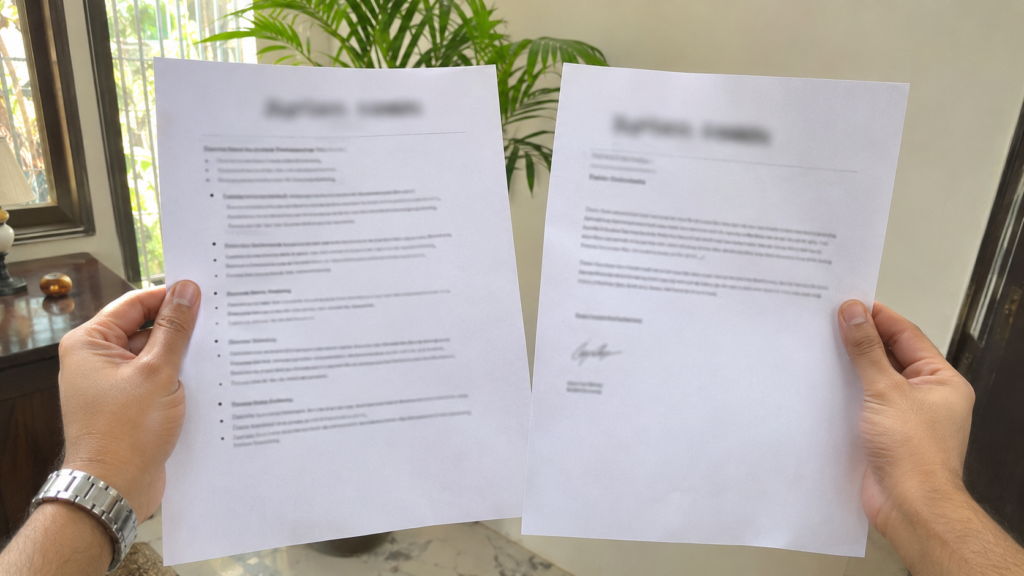
Before comparing the two, it helps to define each one clearly.
Resume
A resume is a structured summary of your work history, skills and education, usually tailored to the job you are applying for. It is built for fast scanning. A recruiter often spends only a few seconds on a first pass, so every line has to earn its place.
Cover Letter
A cover letter is a brief, personalized letter that introduces you and expresses interest in a specific role. Its job is to connect your experience to what the company needs. If you have ever searched for the meaning of a cover letter in a resume application, this is the answer: it is the letter that accompanies your resume, not a section inside it.
CV, Letter of Introduction and Application Letter
A few related terms cause extra confusion:
CV (curriculum vitae): a longer, more detailed record of your full academic and professional history. A CV is comprehensive, a resume is a short tailored snapshot, and a cover letter is a personal pitch.
Letter of introduction: a general letter that introduces you to a company or contact, often without a specific opening in mind.
Application letter: often used as another name for a cover letter, though it can be more formal in government or academic roles. The difference between an application letter and a resume is the same: the letter explains your intent in prose, while the resume lists your qualifications in a structured format.
Difference Between a Resume and a Cover Letter: Side by Side
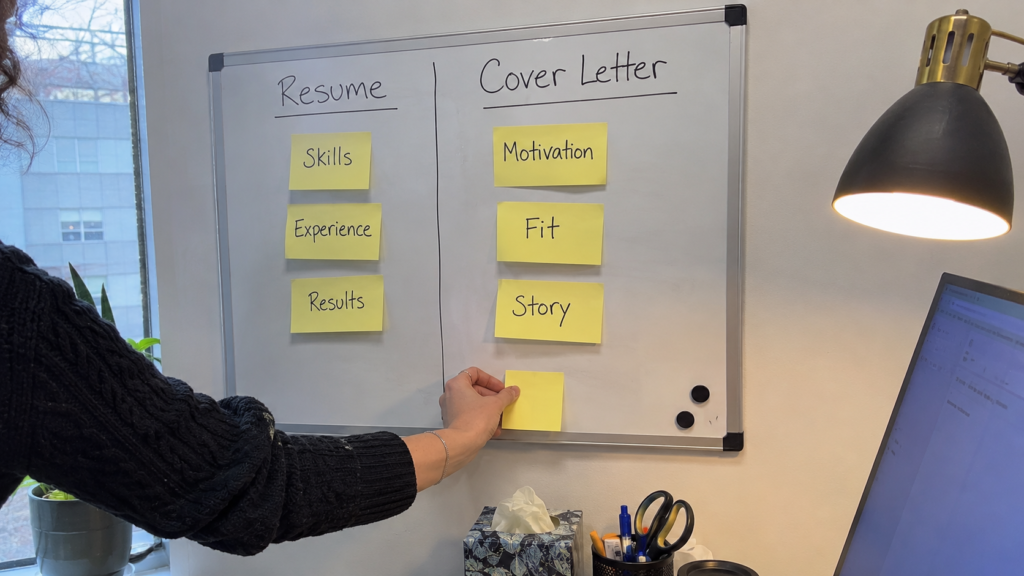
The quickest way to see the difference is to compare the two documents on the points that matter most to a hiring manager.
Resume Cover Letter
Main purpose Prove you are qualified Show why you want this role and this company
Content Work history, skills, education, results Motivation, fit, one or two key achievements
Format Bullets, headings, sections Three to four short paragraphs
Length One to two pages Under one page
Tone Factual and concise Personal and professional
Reader’s focus Keywords, experience level, hard skills Interest, personality, culture fit
Purpose and Content
The purpose of a cover letter versus a resume comes down to one idea. Your resume answers “Can this person do the job?” Your cover letter answers “Why does this person want it, and will they fit here?”
A resume speaks to the logical side of the reader. It carries facts, achievements and career progression. A cover letter speaks to the personal side. It carries your goals, your motivation and your connection to the company. If your resume is vague or loaded with duties instead of results, a strong cover letter cannot rescue it. A human-written resume service can help you turn duties into measurable achievements before you write a single line of the letter.
Length, Format and Tone
Keep your resume to one or two pages and use clean headings and bullets. Keep your cover letter to three or four short paragraphs, written in full sentences. The resume is scanned. The letter is read, so it needs a natural voice and a clear opening line.
What a Resume and a Cover Letter Have in Common
The two documents are not opposites. Both should be tailored to the specific job. Both should use keywords from the job posting, because applicant tracking systems (ATS) scan for them. And both exist for the same goal: proving you are the right candidate. They simply do it in different formats.
When to Send a Resume, a Cover Letter or Both
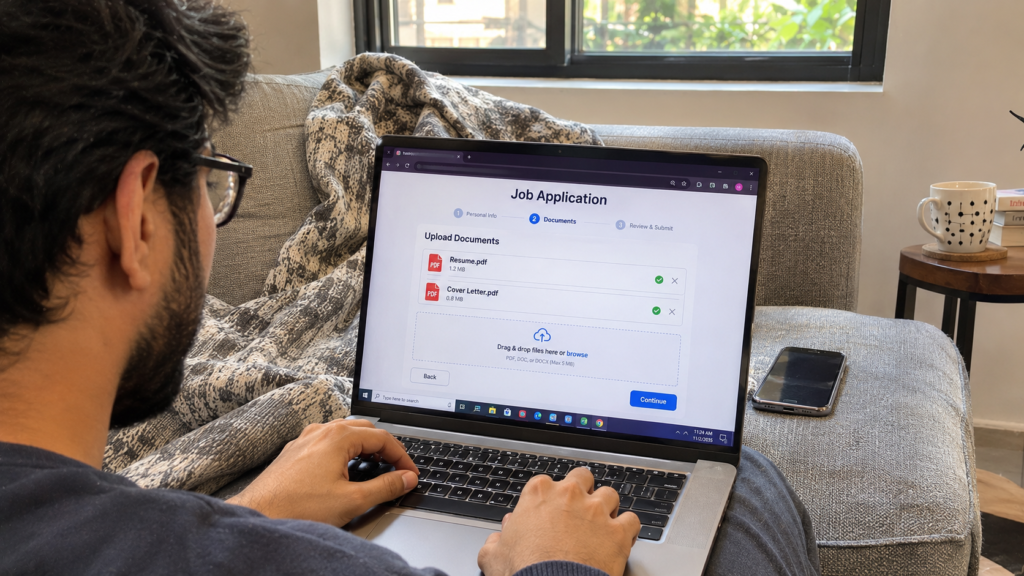
Not every application asks for both documents, but knowing when each one matters can set you apart.
Application scenario Resume Cover letter Why
Job portal such as Indeed or LinkedIn Yes Optional Portals prioritize resumes, and letters may not be reviewed unless requested
Email or direct to a hiring manager Yes Yes The letter personalizes your message and shows real interest
Responding to a recruiter Yes Usually no Recruiters want to assess your qualifications quickly
Internal job application Yes Yes Use the letter to explain why you want the move or promotion
Executive or leadership role Yes Yes These roles expect clear strategic thinking and alignment with company vision
Academic, research or government role Yes Yes These fields often expect complete, formal documentation
Career change or return after a break Yes Yes The letter explains your motivation and transferable skills
A simple rule: if the role values personal connection or a career story, include a cover letter even when it is optional. Many applicants skip it, so it can set you apart.
What Goes First, the Cover Letter or the Resume?
When you combine both into one file or a printed package, the cover letter goes first and the resume follows. The letter works as your introduction, and the resume sits behind it as the proof. When you upload them separately, name each file clearly, for example “Firstname-Lastname-Resume” and “Firstname-Lastname-Cover-Letter”.
Resume vs Cover Letter Examples: Same Achievement, Two Formats
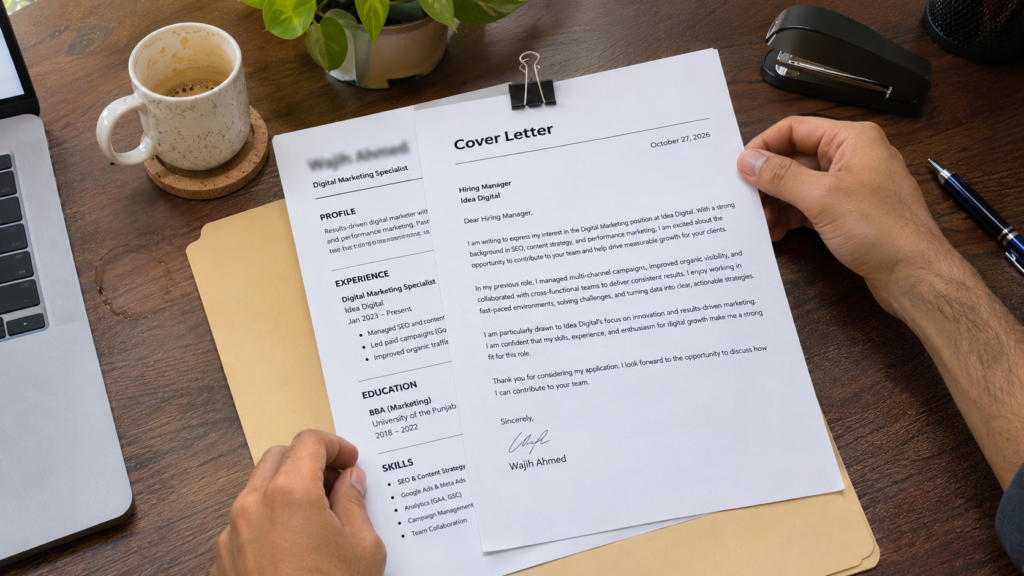
The best way to understand the difference is to see one achievement written both ways. The resume keeps it factual. The cover letter adds context and motive.
Example 1: Email Marketing
Resume bullet: Increased email campaign open rates by 35% by segmenting audiences and testing subject lines.
Cover letter sentence: In my previous role, I redesigned our email strategy by segmenting our audience, which led to a 35% increase in open rates within three months.
Example 2: Customer Retention
Resume bullet: Reduced customer churn by 18% through onboarding redesign and proactive retention efforts.
Cover letter sentence: Understanding customer pain points is something I prioritize, which is why I redesigned our onboarding journey and helped reduce churn by 18%.
Your cover letter is only as strong as your resume
Get a free, no-obligation review from a real human writer. No AI shortcuts, just a resume built to pass the software and win over the people who hire.
Why the Resume Bullet Matters Most
Notice that the cover letter sentence only works because the resume bullet is strong. A number, a method and a result give the letter something real to build on. If your resume bullets are weak, the letter has nothing to point to.
Common Mistakes When Writing a Resume and Cover Letter
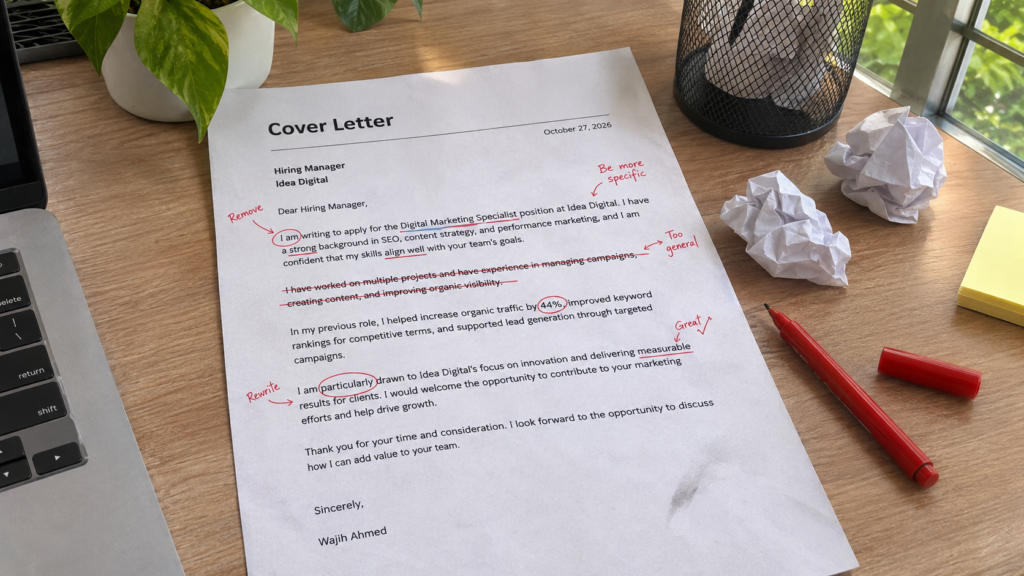
Even strong candidates weaken their applications with these habits.
Repeating Your Resume in the Cover Letter
Do not copy your bullets into the letter. Use the letter to explain why you are a good fit, and pick one or two achievements to expand on.
Writing a Generic Cover Letter
Opening with “Dear Sir or Madam, I am writing to apply for a job” tells the reader nothing. Name the company, name the role, and show you understand what the business does.
Ignoring Keywords
Use the same language the employer uses in the job description. ATS software scans both documents for relevant terms.
Making Either Document Too Long
A three-page resume or a 1,000-word letter will not be read in full. Keep the resume to one or two pages and the letter to three or four paragraphs.
Forgetting a Call to Action
End the letter by restating your interest and asking for an interview. Passive endings such as “I hope to hear from you” give the reader no next step.
FAQs: Difference Between Resume and Cover Letter
Is a cover letter the same as a resume?
No. A resume is a structured summary of your skills, experience and education. A cover letter is a personalized letter explaining why you are a good fit for a specific role. They serve different purposes and are usually submitted together.
Does a resume include a cover letter?
Not automatically. They are two separate documents. The resume lists your qualifications, and the cover letter introduces you. You normally attach them as two files, or combine them into one file with the cover letter first.
What goes first, a cover letter or a resume?
The cover letter goes first and the resume follows. The letter acts as your introduction, and the resume sits behind it as the supporting detail. This applies to a combined file or a printed application package.
Do I always need both a resume and a cover letter?
No. It depends on the application method and the job. Job portals often prioritize the resume, while direct applications to a hiring manager usually benefit from both. If a posting asks for a letter, always send one.
Can I use the same cover letter for multiple applications?
You can start from a template, but customize each letter for the role and company. Generic letters are easy for hiring managers to spot and suggest low interest. Personalization is what makes a letter worth reading.
Turn Your Resume and Cover Letter Into Interviews
A cover letter can open the door, but your resume is what proves you belong in the room. The two documents work best together: the resume appeals to the analytical side of the reader with clear results, and the cover letter connects on a personal level with your motivation and fit.
If your resume still reads like a list of duties, start there. Our human-written resume service pairs you with a real writer who builds an ATS-friendly resume around your achievements, so your cover letter has strong proof to stand on.
Ready to send an application that gets replies? Start with a resume written by a real person who understands what hiring managers look for.
See Our Resume Writing Service →