



You’ve built teams, led transformations, managed budgets that most people only read about in reports.
And yet, your inbox is quiet.
No interviews. No feedback. Just silence after applications.
Let’s be honest, this is one of the most frustrating experiences for senior professionals. Because at this level, you are not questioning your ability. You are questioning why your experience is not translating into opportunities.
If you are applying and hearing nothing back, this might be why.
Most executive resumes are not failing because of lack of experience. They are failing because they are not positioned correctly for how hiring actually works today.
And that gap is exactly where C-suite resume writing becomes critical.
Why Executive Resumes Get Ignored
Most job seekers don’t realize this, but executive hiring is filtered long before a human ever reads your resume.
This is where a lot of resumes quietly fail.
At the C-suite level, your resume is judged on three invisible layers:
- ATS systems filtering for relevance
- Recruiter scanning for clarity and positioning
- Executive decision makers looking for strategic fit
If any one of these layers does not understand your value quickly, your resume gets ignored.
Common reasons executive resumes fail:
- Overly complex career storytelling
- Lack of measurable business impact
- Generic leadership language
- Poor keyword alignment with job descriptions
- Weak executive summary positioning
- Formatting that breaks ATS readability
If your resume is not structured correctly, it does not matter how strong your experience is.
It never gets seen.
How ATS Impacts Executive Hiring More Than You Think
Many executives assume ATS systems only affect junior roles. That is not true.
ATS-friendly resume structure is essential even at senior leadership levels.
How ATS typically filters resumes:
- It scans for job title alignment
- It matches industry-specific keywords
- It evaluates structure and formatting
- It removes resumes it cannot read properly
If your resume is not optimized, it may never reach a human reviewer.
This is where how to pass ATS becomes more than a technical concern. It becomes a visibility issue.
Common ATS mistakes executives make:
- Using multi-column layouts that break parsing
- Embedding graphics or design-heavy elements
- Using inconsistent job titles across roles
- Writing overly long narrative paragraphs
- Missing keyword alignment with target roles
A professional resume writing service understands how to balance design, readability, and keyword structure so your resume is visible and competitive.
What Makes a C-Suite Resume Actually Work
Executive resumes are not longer versions of standard resumes. They are strategic documents built for decision making.

Here is what separates strong executive resumes from average ones.
1. Leadership impact over responsibilities
At the executive level, responsibilities are assumed. Impact is what matters.
Weak example:
- Responsible for sales operations across regions
Strong example:
- Led global sales operations across 12 markets, increasing annual revenue from $28M to $65M within 3 years
That difference is not cosmetic. It is what gets attention.
2. A clear executive identity
Your resume should immediately answer:
- What type of leader are you
- What industries do you impact
- What level of decisions do you influence
If a recruiter cannot define your positioning in 10 seconds, they move on.
3. Strategy over chronology
Most resumes are structured like timelines.
Executive resumes should be structured like narratives of impact.
Instead of listing every role equally, your resume should emphasize:
- Transformation stories
- Business outcomes
- Organizational scale
- Leadership scope
This is where resume writing service expertise becomes valuable. Because positioning is not about adding more content, it is about choosing the right content.
Resume vs AI Resume in Executive Hiring
There is a growing trend of using AI to generate resumes quickly.
But here is the problem. AI resumes often look polished but feel generic.
Let’s compare:
| Factor | AI Resume | Human Executive Resume |
| Personal positioning | Generic | Tailored leadership identity |
| Storytelling | Surface level | Strategic narrative |
| ATS optimization | Basic keyword match | Intent-based keyword integration |
| Executive tone | Flat | Boardroom level communication |
| Interview conversion | Low | Significantly higher |
We have seen professionals using AI-generated resumes struggle with resumes not getting interviews even when they are highly qualified.
The issue is not formatting. It is positioning and interpretation of experience.
AI can structure information, but it struggles to understand leadership context.
That is where human resume help still matters deeply.
LinkedIn Optimization is No Longer Optional
Your resume does not exist in isolation anymore.
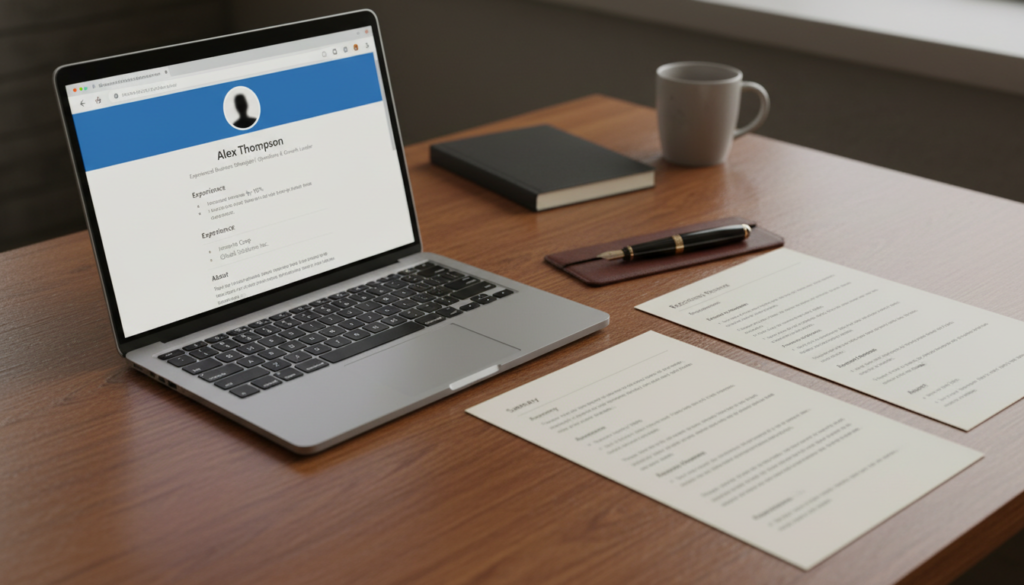
Recruiters and hiring managers will check your LinkedIn profile before making decisions.
If your resume and LinkedIn profile do not align, it creates doubt.
Strong LinkedIn optimization ensures:
- Consistent executive branding
- Aligned achievements and messaging
- Clear leadership positioning
- Recruiter visibility improvements
- Thought leadership signals
We have seen professionals significantly improve response rates simply by aligning their resume and LinkedIn narrative.
This is often part of a full job application help strategy, not just document writing.
Common Resume Mistakes That Cost Executive Interviews
If you are experiencing silence after applying, these may be the reasons:
- Too much focus on early career history
- No measurable business outcomes
- Weak or vague executive summary
- Overuse of buzzwords without proof
- No clear leadership positioning
- Poor formatting affecting ATS readability
- Lack of industry-specific keywords
Most executives do not have a bad resume. They have an unclear one.
And clarity is what drives interviews.
Case Study: Executive Resume Transformation
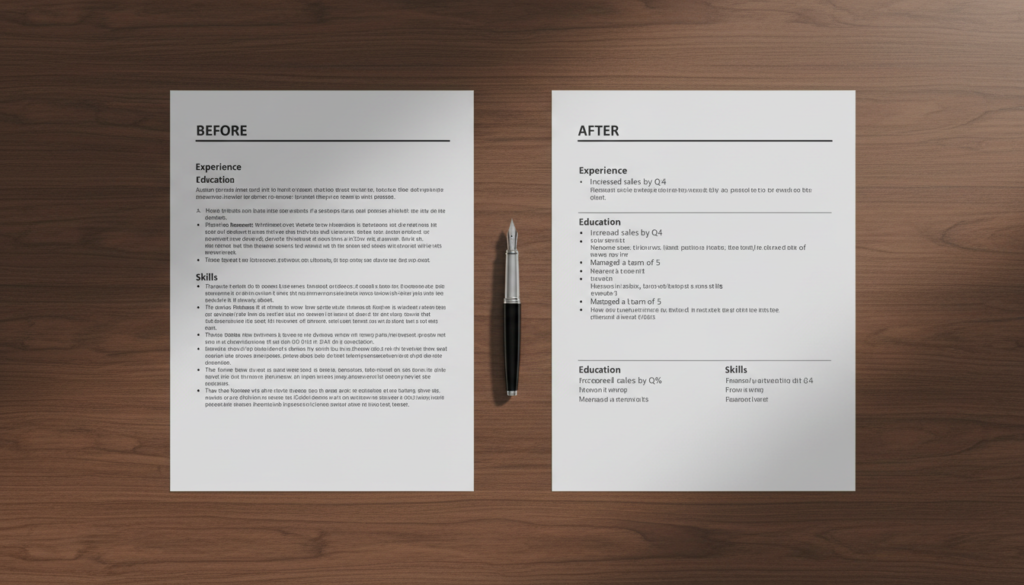
Let’s look at a real-world style example.
Profile:
Chief Operating Officer with 17 years of experience across manufacturing and logistics
Before:
- 4-page resume
- Heavy focus on early career roles
- No quantified leadership outcomes
- Generic summary section
- No keyword alignment with target roles
Problem:
Despite strong experience, the candidate received no interviews for 2 months.
After professional resume writing service support:
Changes made:
- Reduced resume to 2 focused pages
- Rebuilt executive summary around leadership identity
- Highlighted P&L ownership and operational transformation
- Added measurable business outcomes across roles
- Aligned keywords with target industry roles
- Structured content for ATS readability
Result:
- First interview within 12 days
- Multiple recruiter callbacks within 3 weeks
- Shortlisted for two leadership roles within 6 weeks
This is not about exaggeration. It is about clarity and positioning.
When You Should Consider Professional Resume Help

You might benefit from expert support if:
- You are applying but getting no responses
- You are unsure if your resume is ATS-friendly
- You are targeting executive or leadership roles
- You are switching industries or functions
- Your experience feels too complex to structure
- You have not updated your resume in years
A strong resume writing service does not rewrite your career. It translates it.
Myths About Executive Resumes
Myth 1: More applications mean better results
Not true. Better positioning creates better responses.
Myth 2: Templates fix everything
Templates cannot solve positioning problems.
Myth 3: ATS is the only issue
Sometimes it is visibility. Sometimes it is messaging.
Myth 4: AI resumes are enough
AI can help structure, but not strategically position leadership impact.
Frequently Asked Questions
Why is my resume not getting interviews?
Most often it is due to unclear positioning, weak impact statements, or poor ATS alignment rather than lack of experience.
Are ATS-friendly resumes really important for executives?
Yes. Many executive resumes are filtered out before human review due to formatting and keyword issues.
Is it worth hiring a resume writer at C-suite level?
Yes, because executive hiring is highly competitive and positioning often determines interview selection.
How long should a C-suite resume be?
Ideally 2 pages, sometimes 3 if experience is extensive. Clarity matters more than length.
Can a resume help with career switching at executive level?
Yes, but it requires strategic reframing of leadership experience and transferable impact.
What is reverse recruiting?
It is a service where professionals support your job search strategy, applications, and positioning to increase visibility and interview chances.
Where Professional Support Makes the Difference
At senior levels, small changes in wording can significantly change perception.
That is why many professionals turn to a professional resume writing service not just for writing, but for strategy.
We have helped professionals across industries improve their resumes, refine LinkedIn optimization, and rebuild their job search positioning so they are not just applying, but being selected.
You can explore more here:
- Resume review page: [Insert internal link]
- Resume writing packages: [Insert pricing link]
- How it works: [Insert process link]
- Contact us: [Insert contact link]
Final Thoughts
A strong executive resume is not about listing everything you have done.
It is about showing the right things in a way that makes decision makers stop and pay attention.
A good resume does more than list your experience. It tells your story in a way that makes someone want to interview you.
And if your story is not getting through right now, it is not because it is not strong enough.
It is because it may not be positioned clearly enough yet.
That is something that can be fixed.