



You’ve done the work.
Long shifts, high-pressure decisions, patient care that most people will never fully understand.
And yet, when you apply for jobs with your nurse resume, it feels like none of that is landing.
No interviews. No replies. Just silence.
Let’s be honest, that kind of job search experience can shake your confidence.
Most nurses assume their experience will speak for itself. But today’s hiring systems don’t work that way anymore. Before a recruiter even sees your resume, it often has to pass ATS filters, match job keywords, and survive a very fast scan.
If it doesn’t, it gets filtered out quietly.
This is where a lot of nurse resumes fail, even for highly skilled professionals.
What Makes a Strong Nurse Resume Get Interviews
Most job seekers don’t realize this, but resumes are rarely rejected because of lack of experience.
They are rejected because of the presentation.
1. It lists duties instead of outcomes
A common pattern we see:
- Administered medications
- Assisted physicians
- Monitored patient vitals
The problem is, this describes the job, not your impact.
Recruiters already know what nurses do. What they want to know is how well you did it.
A stronger version looks like this:
- Improved patient recovery outcomes through consistent monitoring and early intervention
- Supported critical care teams in reducing complications in ICU settings
- Enhanced patient safety through accurate medication administration and documentation
This shift matters more than most people realize.
2. It is not aligned with ATS systems
Most hospitals and healthcare organizations use ATS-friendly resume software to filter applications before human review.
If your resume does not include the right structure or keywords, it may never be seen.
Common ATS issues include:
- Complex formatting that breaks parsing
- Missing keywords like “acute care,” “ER,” or “patient assessment”
- Non-standard job titles
- Graphics or tables that confuse the system
If you’re applying and hearing nothing back, this might be why.
3. It is too generic for the role
A pediatric nurse resume should not look identical to an ICU nurse resume.
But many candidates use one version everywhere.
That is one of the biggest reasons why resumes get rejected without feedback.
How ATS Actually Reads a Nurse Resume

ATS systems do not understand experience the way humans do.
They scan for patterns.
They look for:
- Matching keywords from job descriptions
- Standard section headings
- Recognizable job titles
- Certifications and licenses
For example, if a job description says “emergency care experience” and your resume says “hospital nursing,” the system may not match you correctly.
Simple ATS rules for nurses:
- Use clear headings like “Work Experience” and “Certifications”
- Include keywords naturally from job postings
- Avoid tables, columns, or graphics
- Keep formatting clean and simple
- Match job terminology exactly where possible
This is the foundation of an ATS-friendly resume. Without it, even strong nurses get filtered out early.
What a Strong Nurse Resume Actually Looks Like

A strong resume does not try to sound impressive. It tries to be clear, relevant, and easy to trust.
Professional Summary That Actually Speaks to Hiring Managers
Weak example:
“Compassionate nurse with experience in patient care.”
Stronger example:
“Registered Nurse with 7+ years of experience in acute and emergency care settings. Skilled in patient assessment, critical response, and improving clinical outcomes in fast-paced hospital environments.”
It is specific. It is confident. It immediately signals relevance.
Skills Section That Matches Job Descriptions
This section should feel intentional, not generic.
Include:
- Patient assessment and triage
- Emergency care support
- IV therapy and medication administration
- Electronic Health Records (EHR) systems
- Wound care and infection control
- Patient communication and education
Most recruiters scan this section quickly to confirm fit.
Clinical Experience That Shows Impact
This is where most resumes lose attention.
Instead of listing duties, show outcomes.
Weak:
“Worked in ICU department”
Stronger:
“Provided critical care support in ICU, assisting in stabilizing high-risk patients and improving response efficiency during emergency situations.”
This is what separates average resumes from interview-winning ones.
Certifications That Build Trust Fast
Healthcare hiring managers look for this immediately.
Include clearly:
- Registered Nurse (RN) License
- BLS Certification
- ACLS Certification
- Any specialty certifications
If this section is unclear, your resume loses credibility fast.
Resume Mistakes That Quietly Kill Nurse Applications
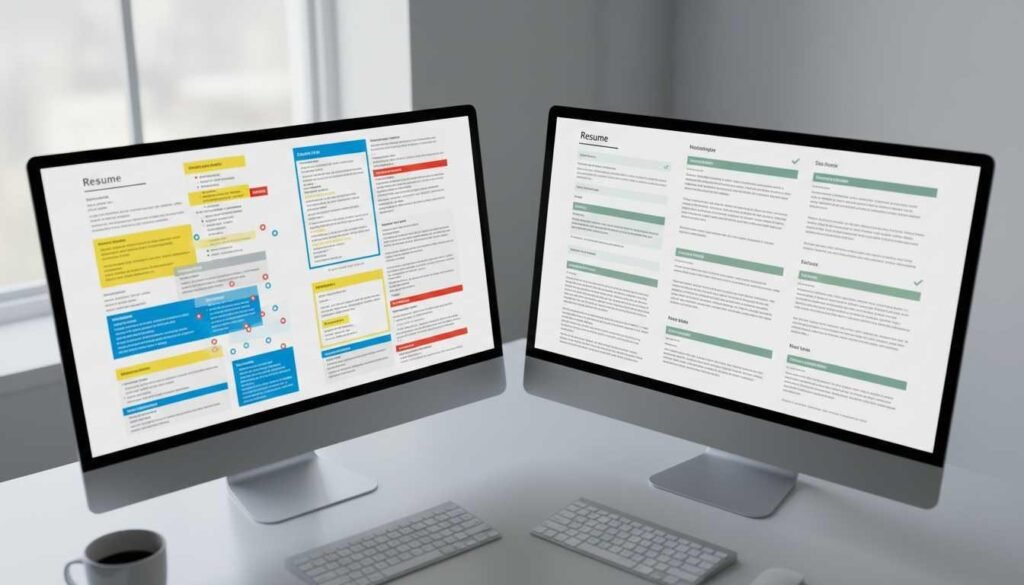
We’ve reviewed thousands of resumes, and the same mistakes appear repeatedly.
Common mistakes:
- Generic summaries with no direction
- No measurable achievements
- Overdesigned templates that break ATS
- No tailoring to job roles
- Missing keywords from job descriptions
Simple do’s and don’ts:
Do:
- Tailor resume per job
- Use simple formatting
- Include keywords naturally
- Show impact, not just tasks
Don’t:
- Use decorative templates
- Send one resume everywhere
- Copy job descriptions blindly
- Overuse vague phrases like “hardworking nurse”
Why AI Resume Tools Often Fail Nurses
AI resume tools are everywhere now.
And yes, they can help with speed. But speed is not the problem.
Context is.
Resume vs AI resume reality:
| AI Resume | Human-Written Resume |
| Generic language | Role-specific phrasing |
| Weak clinical nuance | Healthcare-aware wording |
| Keyword stuffing | Natural ATS alignment |
| One-size-fits-all structure | Tailored per specialty |
This is why many job seekers still turn to a professional resume writing service when results matter.
Resume and LinkedIn Must Work Together
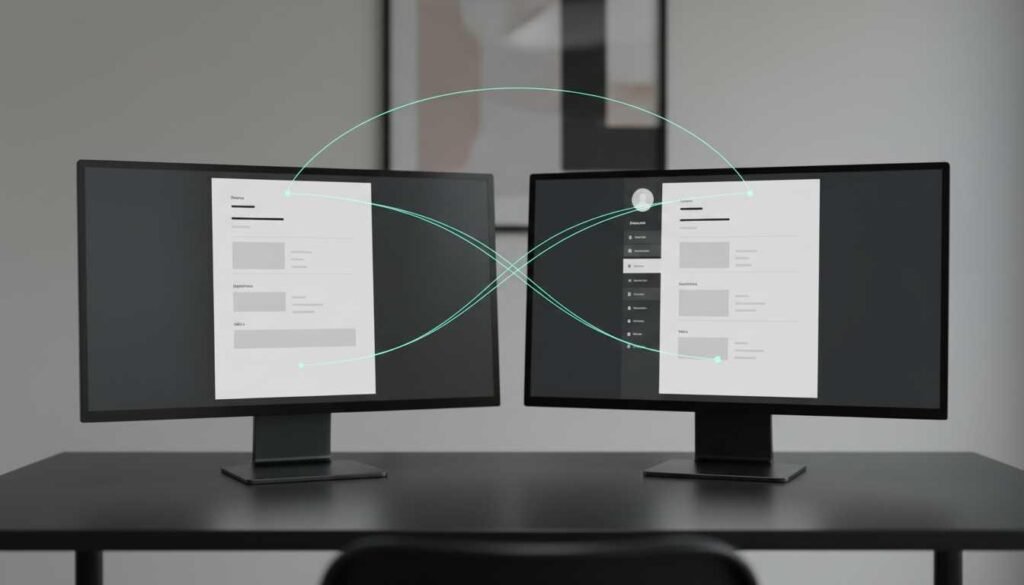
Many nurses overlook this completely.
But recruiters often check LinkedIn before interviews.
If your resume and LinkedIn profile do not align, it creates doubt.
Alignment checklist:
- Same job titles
- Consistent career story
- Matching skills and certifications
- Similar summary positioning
This is where LinkedIn optimization becomes part of your job search strategy, not just an add-on.
Real Example: Nurse Who Went From Silence to Interviews
We worked with a mid-career registered nurse struggling to get responses for months.
Before:
- Generic resume
- No measurable outcomes
- Weak summary
- No ATS optimization
After:
- Fully ATS-friendly resume rebuild
- Clinical impact rewritten clearly
- Keyword alignment with job postings
- Strong professional summary
Result:
Multiple interview invitations within two weeks.
We have helped professionals across industries improve their resumes, and healthcare is one of the most sensitive hiring environments.
Small changes often lead to big differences.
When Nurses Should Get Resume Help
Not every resume needs professional rewriting. But many do.
You may need resume help if:
- You are not getting interviews despite applying consistently
- You are unsure if your resume is ATS-compliant
- You are changing nursing specialties
- You feel your experience is not being recognized
- You are overwhelmed by job applications
This is where a structured resume review or a professional resume writing service becomes useful.
We also support job application help, cover letters, and full LinkedIn optimization for healthcare professionals.
Myths About Nurse Resumes

Let’s clear up a few common misunderstandings.
Myth 1: More applications equal more interviews
Not true. Better targeting wins.
Myth 2: Templates fix everything
Templates do not understand your clinical value.
Myth 3: ATS is the only issue
Even ATS-friendly resumes fail if content is weak.
Myth 4: Experience alone guarantees interviews
Only if it is clearly communicated and positioned.
Frequently Asked Questions
Why is my nurse resume not getting interviews?
Usually due to ATS issues, weak summaries, or lack of measurable impact.
Are ATS-friendly resumes really important?
Yes. Most healthcare employers use ATS before human review.
Is it worth hiring a resume writer?
If you are getting no interviews despite strong experience, it often helps significantly.
How long should a nurse resume be?
One to two pages depending on experience level.
Can a resume help with career switching in nursing?
Yes, if it is repositioned with transferable skills and relevant keywords.
What is reverse recruiting?
It is a service where professionals help manage and target your job applications strategically.
Final Thoughts
A nurse’s resume is not just a document. It is your professional story, compressed into something a recruiter can understand in seconds.
And in healthcare hiring, clarity wins more than complexity.
A good resume does more than list your experience. It tells your story in a way that makes someone want to interview you.
If your resume is not getting interviews, it is not always about your skills. It is often about how those skills are being presented.
And that is something that can be fixed.
Take the Next Step
Get Your Free Resume Review Today
Find out exactly what is holding your resume back.
Book a Free Consultation with a Resume Expert
Speak with someone who understands healthcare hiring deeply.
Let a Human Resume Writer Improve Your Resume
Get a professionally written, ATS-optimized nurse resume.
Need help applying to jobs?
Ask about reverse recruiting and full job application support.