



You can have solid experience, real results, even years of hard work behind you, and still hear nothing back after applying.
No interviews. No feedback. Just silence.
Let’s be honest, that kind of job search experience can shake your confidence faster than anything else.
Most job seekers don’t realize this at first, but the issue is not always the experience. Often, it is how that experience is presented.
And one of the biggest hidden factors is your resume format.
If you are applying and hearing nothing back, this might be why.
Why Resume Format Can Quietly Decide Your Career Outcome
Hiring today is not just human anymore. It is filtered, scanned, and ranked before a recruiter even opens your file.
Your resume usually goes through an ATS (Applicant Tracking System) first. If it cannot read or understand your structure properly, it may never reach a human.
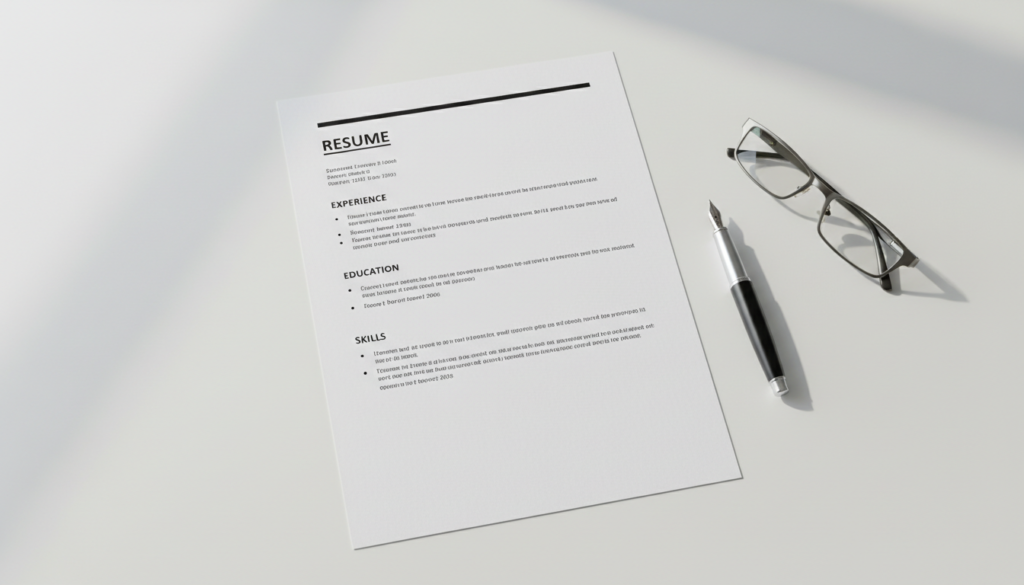
Even if it does, recruiters only spend a few seconds scanning it.
So the question is not just “Do you have experience?”
It is “Is your experience structured in a way that makes sense instantly?”
We have seen this repeatedly through our work as a professional resume writing service, supporting candidates across industries with ATS-friendly resume optimization, resume review, and full job application help.
Small format choices often decide whether you get interviews or get ignored.
There are three main resume formats:
- Chronological resume
- Functional resume
- Hybrid resume
Each one tells your story differently, and each one can either support your job search or quietly hold you back.
Chronological Resume Format (Traditional but Still Powerful)
The chronological resume is the most widely used format in hiring today.
It focuses on your work history in reverse order, starting with your most recent role.
Structure
- Contact Information
- Professional Summary
- Work Experience (recent first)
- Skills
- Education
When It Works Best
This format is ideal if:
- You have a stable career path
- Your experience shows clear progression
- You are staying in the same industry
- You have no significant employment gaps
Recruiters are familiar with it, and that familiarity builds trust quickly.
Why Recruiters Like It
It clearly shows:
- Career growth over time
- Job stability
- Recent and relevant experience
Most hiring managers are trained to read this format quickly, which is why it is still widely accepted.
Where It Can Fail
Let’s be honest, it is not perfect.
Chronological resumes can hurt you if:
- You have career gaps
- You changed industries
- You have frequent job changes
- Your strongest experience is not recent
This is where a lot of resumes quietly fail.
And if your resume is not properly optimized for ATS systems, those gaps become even more visible.
This is often why people say:
- “My resume is not getting interviews”
- “Why do resumes get rejected even when I am qualified”
Sometimes it is not your experience. It is the story your resume is telling.
Functional Resume Format (Skills Over Timeline)
The functional resume focuses on skills instead of job history.
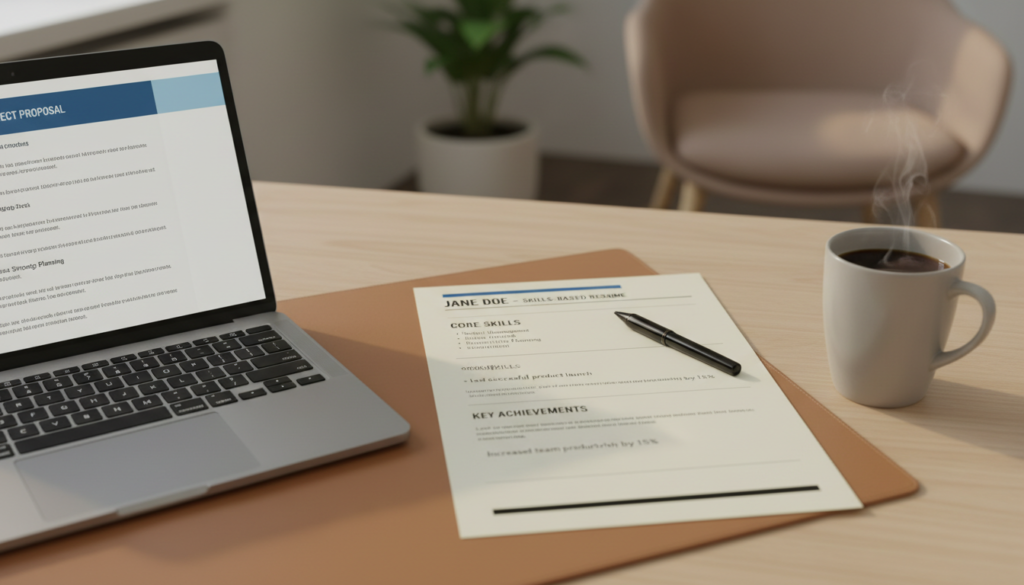
Instead of emphasizing where you worked, it emphasizes what you can do.
Structure
- Contact Information
- Professional Summary
- Core Skills Categories
- Key Achievements
- Minimal Work History
Who It Is Designed For
This format is often used by:
- Career changers
- Freelancers or contractors
- Early career professionals
- People with employment gaps
It shifts attention away from timeline and toward ability.
Why Job Seekers Choose It
It feels safer.
It highlights strengths like:
- Leadership
- Communication
- Technical skills
- Problem solving
On paper, it looks like a smart way to control your narrative.
The Reality in Hiring
Here is the part most people do not expect.
Many recruiters are cautious about functional resumes.
Why?
Because they make it harder to understand:
- When the experience happened
- How recent the skills are
- Whether the work is consistent
ATS systems also prefer structured work history. Functional resumes can reduce keyword clarity and ranking performance.
So even strong candidates sometimes struggle simply because their format creates doubt.
Hybrid Resume Format (Modern Standard for Most Professionals)
The hybrid resume combines the best of both formats.
It is currently one of the most effective structures for both ATS systems and recruiters.
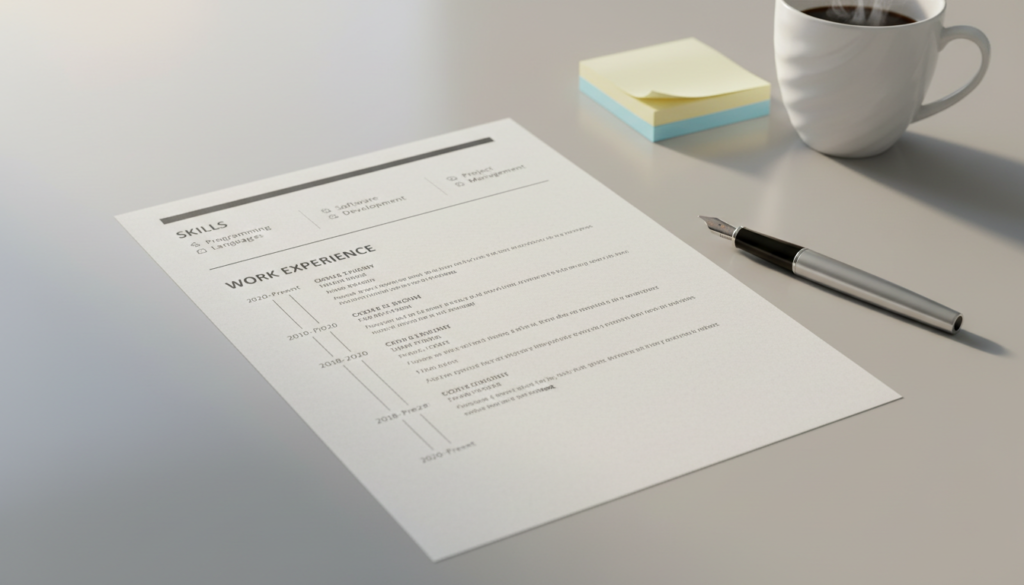
Structure
- Contact Information
- Professional Summary
- Skills Section (highlighted early)
- Work Experience (chronological)
- Education
- Certifications
Why It Works So Well
It solves two problems at once.
- Skills are visible immediately
- Career history remains clear and structured
This makes it easier for both systems and humans to understand your value quickly.
Best Use Cases
The hybrid format works especially well for:
- Mid-career professionals
- Executives
- Career switchers
- Professionals with mixed experience
Why It Is Preferred Today
Hiring has become fast and competitive. Recruiters want clarity without effort.
The hybrid format delivers:
- Fast relevance
- Clear structure
- Strong ATS compatibility
This is also why most professionals who seek resume help or LinkedIn optimization support are guided toward a hybrid structure.
Resume Format Comparison (Simple Breakdown)
| Format | Strength | Best For | Risk |
| Chronological | Clear career path | Stable careers | Exposes gaps |
| Functional | Skills focused | Career changers | Weak ATS trust |
| Hybrid | Balanced structure | Most professionals | Needs strategy |
If you are unsure which one fits you, you are not alone.
Most people choose incorrectly at first.
Common Mistakes That Hurt All Resume Formats

We have worked with professionals across industries, and the patterns are consistent.
1. Choosing format based on templates
Templates look good but do not solve strategy.
2. Ignoring ATS structure
Even strong experience fails without ATS-friendly resume formatting.
3. Weak keyword alignment
If your resume does not match job language, it may not rank.
4. Overdesigning the resume
Complex layouts often confuse ATS systems.
5. Not tailoring for job applications
One resume for all roles rarely performs well.
This is where structured resume review support can make a real difference.
Case Study: Format Change That Improved Results
Profile:
Engineering Manager
Before (Functional Resume)
- Skills listed clearly but no timeline
- Weak job progression visibility
- No measurable achievements highlighted
- No interview responses despite consistent applications
Result: Frustration and burnout from applying.
After (Hybrid Resume with Strategy)
- Strong professional summary aligned with target roles
- Skills grouped by leadership and technical execution
- Clear chronological experience with measurable impact
- ATS optimization added
Result: Interview calls within two weeks.
Same experience. Different structure.
This is why we often say resume formatting is not design. It is positioning.
Resume Myths That Hold Job Seekers Back
Myth 1: More applications mean better results
If the resume is weak, more applications only increase frustration.
Myth 2: Templates fix everything
Templates are tools, not strategy.
Myth 3: ATS is the only problem
ATS matters, but recruiters still make final decisions.
Myth 4: AI resumes are enough
This is where the resume vs AI resume discussion becomes important. AI can help with wording, but it does not understand hiring intent or positioning.
When Professional Help Becomes Worth It
You might need support if:
- You are applying regularly but getting no interviews
- You are unsure which resume format fits your career
- You are changing industries
- You feel your experience is not being recognized
- You are targeting competitive roles
This is where a professional resume writing service can make a measurable difference.
We have seen professionals improve results simply by fixing structure, not adding new experience.
If you are unsure where you stand, a resume review can give you clarity quickly.
You can also explore our pricing or learn how our process works if you want structured support.
Frequently Asked Questions
Why is my resume not getting interviews?
Most often it is due to structure, ATS optimization, or unclear positioning.
Are ATS-friendly resumes really important?
Yes. Most companies use ATS systems to filter candidates before human review.
Is it worth hiring a resume writer?
If you are not getting interviews despite applying, professional help can improve outcomes.
How long should a resume be?
One to two pages depending on experience level.
Can a resume help me switch careers?
Yes, especially when using a hybrid format that highlights transferable skills.
What is reverse recruiting?
It is a service where job applications and outreach are managed on your behalf.
Final Thoughts
Choosing between chronological, functional, and hybrid resume formats is not just a formatting decision.
It is a career strategy decision.
A good resume does more than list your experience. It tells your story in a way that makes someone want to interview you.
And if your resume is not doing that right now, it is not always a reflection of your ability. It is often a structure problem, not a skill problem.
If you want clarity, you can get a free resume review or book a consultation with a resume expert.
We have helped professionals across industries improve their resumes, strengthen LinkedIn optimization, and align job applications so they finally start getting responses.
Sometimes, the difference between silence and interviews is not your experience. It is how that experience is presented.